 |
Aysgarth Union WorkhouseThis page is intended to give a little local insight into the workhouse at Bainbridge from 1809 - 1930 and the staff and associated people who were connected with it. The building is currently known as High Hall Residential Home.
High Hall 1924 1812 The Gilbert ActUnder the Gilbert Act the Gilbert Union was formed and the workhouse was called the Bainbridge Incorporation Workhouse. The workhouse gave shelter, relief and employment to the poor of Bainbridge, Askrigg, Hawes, Aysgarth, Low Abbotside, Thoralby and Burton-Cum-Walden. 1813
If anyone has an early photograph of High Hall please could you contact AngelaKershaw 1812From the month of February accountsThe Guardians allowed the purchase of 9 gallons of ale at 1/6d per gallon. 1813The governor of the workhouse was paid a monthly salary of £5-8/-. It was unanimously agreed by the visitors and guardians of the Incorporation Township that the treasurer Mr.------ shall have an advance of £5 per annum. November 1813
At a meeting of the Governors and visitors of the Incorporation Workhouse at this place, it was unanimously resolved that in consequence of the extravagant price of 9d a gallon wine measure paid for new milk for the supply of the house it was becoming highly expedient to remedy the above imposition by the keeping of a cow to be provided at the general expense of the Institution and that Mr Lamb and Mr John Beezon be requested to implore Mr Scarr herewith or any other person the requisite quantity of land for the above purpose. Approx. 1813-1814 From the accounts.
I James Metcalfe do agree to furnish the workhouse with beef at 8d per lb and mutton and veal at 8d per lb. I John Cockbone do agree to furnish the Bainbridge Workhouse with coals. West pit coals at 1/6 per load. East pit coals at 2/6 per load. In todays' money that would be seven and a half and twelve and a half pence respectively. (West pit coal came from West Pits near Hardraw) 1815Governor of the workhouse is a Mr John HarperAt a regular monthly meeting of Visitors and Guardians of the Incorporation Township held this day of July 1815 it was resolved by the major part of the said Visitors and Guardians then present that John Harper the late Governor shall on the first Monday in August shall quit the workhouse and the Chairman Mr R Garth is requested to give him notice accordingly and that all the books, utensils etc. belonging to the said workhouse shall be delivered to William Curwen at the same time.
Letter to Mr John Harper The visitors and the guardians asked him to quit the workhouse and to hand over any books etc. belonging to the workhouse. Mr. Harper refused to leave and it was discussed that the matter may be taken to law. 1816The Rev. Geoff Wood Minister of Aysgarth church was called to the chair as a mediator to try and settle the disagreeable subject of Mr Harper. A solution was reached and the Rev. Wood proposed William Curwen to be the new Governor. The contract of employment was to be for one year. The salary was to be 40 pounds per annum. William Curwen finally becomes Governor of the workhouse 1817
High Hall Back of the workhouse November. The guardians unanimously decided that they would no longer be responsible for payments to the casual poor. Each parish would be directly resposible for the relief of their own casual poor. 1819James Mason from Bainbridge became Governor of the Incorporated Workhouse, Bainbridge Conditions at Bainbridge By this date the annual salary had risen to 45 pounds per annum. James Mason remained governor of the workhouse at Bainbridge for 22 years. He died October 14th 1840. A plaque commemorating the Life of James Mason can be seen at the Methodist Chapel in Bainbridge. James Mason was also the parish constable of Bainbridge and was the last person to commit anyone to sit in the stocks at Bainbridge. The last occasion (approx. 1837) that the stocks were put to use was when a tinker named Jos Swales and his wife (a riotous couple), were committed to sit in the stocks for being drunk and disorderly. 1821Looms were brought in to the workhouse and a weaver was employed to teach the paupers how to weave hurden.
1841
Henry Chapman becomes Governor of the Incorporation Workhouse. His wife was called Mary Chapman. She is listed as coming from Anderby. In the 1841 census It gives Henry the age of 50 and Mary the age of 40. 1846A Medical Officer for Health is now introduced. 1851
Henry Chapman aged 73 is still the Governor of the Incorporation Workhouse. 1861Matthew Blyth aged 29 becomes Governor of the workhouse. He comes from Hawes. Isabella Blyth aged 27 is the Matron. She comes from Appleby in Cumbria. 1869The Gilbert Union was abolished and the Aysgarth Poor Law Union took over the workhouse. The Aysgarth Union was managed by a Board of Guardians made up of 16 local people from the parishes served by the workhouse. The Workhouse is now called the Aysgarth Union Workhouse. 1871Matthew and Isabella have now left the Workhouse and are living in Bainbridge. They have two children living with them who are not related. Jane Dinsdale aged nine and registered as a boarder. John Johnson aged one and registered as a boarder. Matthew Blyths' occupation is now clogger. Matthew eventually moves back to Hawes and becomes an ironmonger and china dealer. Later on Matthew becomes a Guardian at the Aysgarth Union Workhouse. He is still on the Board of Guardians in 1907. Anthony Thistlethwaite aged 60 is now the Master (note change of job description) of the Workhouse. Mary Thisthlethwaite aged 44 is the Matron and comes from Hull. In the 1871 census it records George Whitton (later to become a master at the workhouse) as head of household from Aysgarth aged 37 married and living in Bainbridge. Elizabeth Whitton wife aged 40. Listed as coming from Askrigg. They have four children. One son and three daughters. The youngest is Jane aged two. George Whitton is described as a Master Coachbuilder who employs 3 men and one boy. Living in his house at the time of the census as well as his family were John Akers aged 20. Apprentice from Staindrop. Thomas Plews aged 16 and also apprentice from Richmond. (Boy) John James Cannel aged 24. Coach builder from Douglas Isle of Man. Thomas Stone aged 38 and is listed as a Blacksmith from Manchester.
From an e-mail I received recently 1874
Dr. Alfred Baker In 1889 he moved to a new house in Aysgarth with a doctors surgery attached. Dr Baker is the Officer of Health for the Aysgarth Union Workhouse.
Dr. Baker dies in 1903 aged 50 and Dr.Edward Hime replaces him. 1881George Whitton now no longer Master Coachbuilder but becomes the Master at the Workhouse aged 48. He is listed as a widower. Jane Holmes aged 32 from Aysgarth is the Matron. Jane Whitton daughter aged 12 living with him. Polly Whitton Visitor aged 15 and unwed is also staying there. She is listed as a housemaid. 1890
Dr Thomas Grime 1890 1891George Whitton is still the Workhouse Master aged 58. He is listed as married again. Mrs Elizabeth Whitton is registered as the Matron aged 33 from Bainbridge. 1901Mr. George Whitton from Aysgarth aged 68 Workhouse Master. Elizabeth Whitton from Cubeck aged 43 Workhouse Matron. Frank Whitton (son) aged 17 from Bainbridge. Assistant Master at home. Margaret Whitton (daughter) aged 14. 1903
George Witton Master of the Workhouse dies.
Dr. Edward Hime becomes the Officer for Health at the workhouse 1901 censusFrank Hiscock is listed as coming from a small village in Dorset called Melbury Abbas. He was a servant at the Lecicester Road Union Workhouse, Uppingham, Rutland. 1903
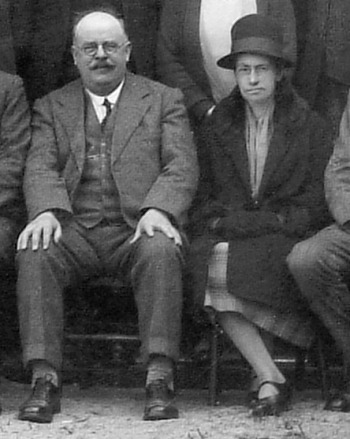
Mr Frank Hiscock
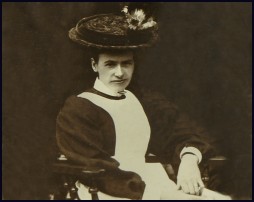
Mrs. Elizabeth Hiscock is the Matron. At this time a Matron did not need any nursing qualifications. They had one child a son, Allen F. born in 1901 at Shepton Mallett. They later had a daughter May who went on to become an attendant at the workhouse(1922) and finally became the assistant Matron(1930) when she married Mr. T. Fawcett Assistant Master. Ivor John Hiscock, Frank's younger brother also came to Aysgarth in 1903 and worked for Frank as a Vagrant Superintendant. In August 1904 Ivor John went back down south to work at Yeovil workhouse as a porter.
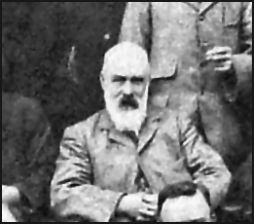
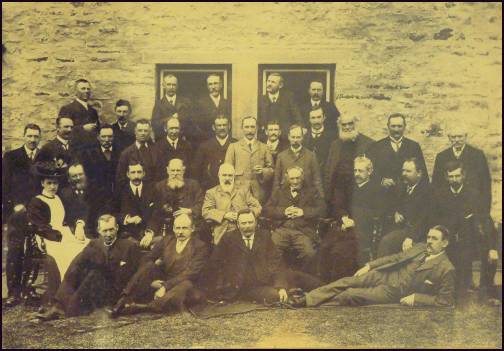
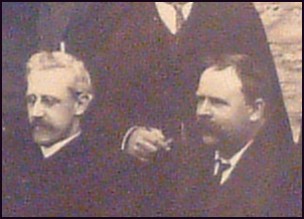
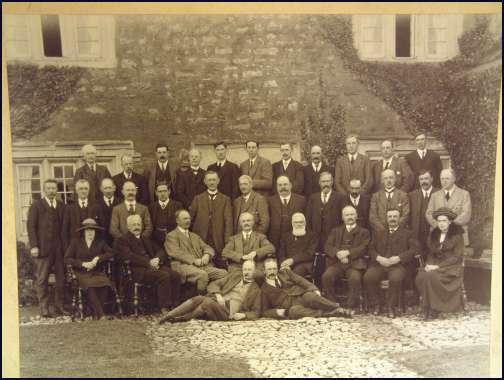
The Aysgarth Board of Guardians in 1907 taken at the back of the workhouse.
1909The Hiscocks are still Master and Matron. 1913
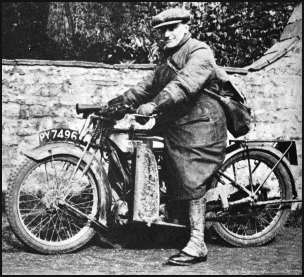
Dr Dean Dunbar Dr. Dean Dunbar from the Aysgarth surgery becomes the new Medical Officer for health at the workhouse. He was also on the Board of Guardians of the workhouse at Bainbridge. Just imagine a doctor today turning up on the doorstep looking like this! (Hardy breed) 1919
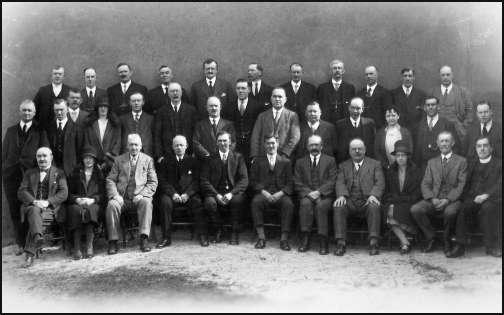
1922Board of Guardians
1930
Mr and Mrs Hiscock used to have parties/dances at the hall and invite local people to join them.
There is now an assistant Master And Matron Mr and Mrs T. Fawcett
Related WebsitesPages that link to this page: About Sycamore Close / High Hall History / High Hall Staff / History Index / Home / Joan Buck / The Reform Of The Poor Law |
![[Sycamore Close, Bainbridge]](http://sycamoreclose.com/images/sycamore_logo.jpg)
Noticeboard Page updated: 7/03/2007 |




 Add a comment to this page